
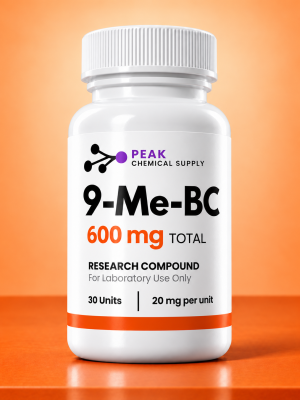
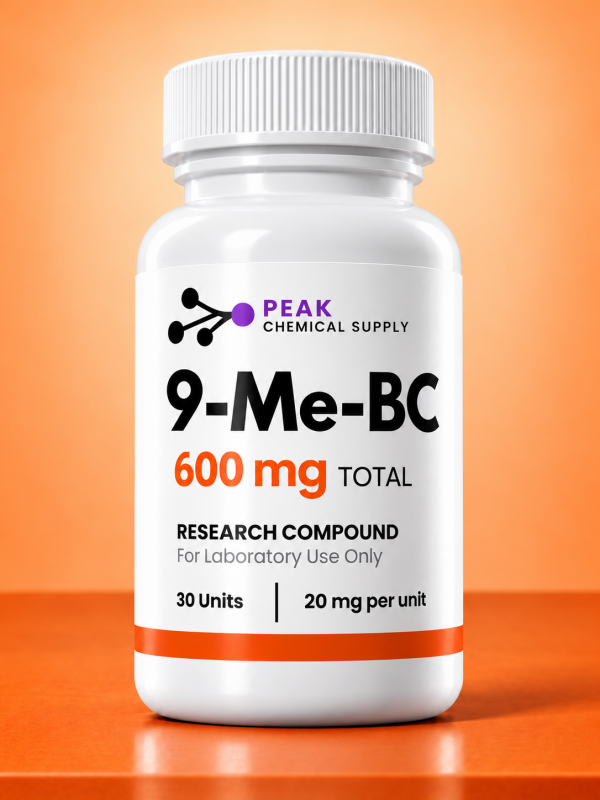
 9-Me-BC
$35.99 USD

9-methylpyrido[3,4-b]indole
CAS 2521-07-5 · 30 × 20 mg · 600 mg total
30 × 20mg 9-Me-BC. Microcrystalline cellulose matrix. Research use only.
 TAK-653
40% of buyers of this compound
$39.99 USD
Research use only · Not for human or animal consumption
For In Vitro Research Use Only – Not for Human or Veterinary Application
β-carbolines are tryptophan-derived alkaloids found in the body and in things like cooked meat and tobacco smoke. Most of the neuroscience on them is about toxicity: the 2,9-dimethylated β-carbolinium ions behave like the Parkinson's-model toxin MPP+ and damage dopamine neurons. 9-methyl-β-carboline (9-Me-BC), which carries a single methyl group on the indole nitrogen, was reported in 2008 to do something different in cell culture, and that set off a short line of research. One commentary on the work was titled "Good guys from a shady family."
Identity: 9-methyl-9H-pyrido[3,4-b]indole, also called 9-methylnorharmane. C12H10N2, 182.22 g/mol, CAS 2521-07-5, PubChem CID 164979.
The originating group describes it as "multimodal". No primary molecular target has been identified.
The literature is small, around a dozen biology papers, and almost all of it comes from one network: Gille, Rommelspacher and collaborators in Dresden and Berlin. It covers primary mouse midbrain cultures, astrocyte cultures, SH-SY5Y cells, rotenone and MPP+ toxin models, and rat studies of hippocampal dopamine and dendrite structure. There are no published human studies and no independent in vivo replication.
Two points come up in the chemistry literature. First, 9-methyl-β-carbolines are UVA photosensitizers and damaged DNA under UVA light in vitro. Second, brain enzymes can methylate β-carbolines in sequence towards the toxic 2,9-dimethyl form. Whether 9-Me-BC itself is converted this way in vivo hasn't been studied.
Lot PCS-9ME-2608A measured 99.5% purity by quantitative NMR at NuMega Resonance Labs (San Diego), report dated August 7, 2026. The certificate is linked under Batch and analysis above. Each bottle holds 30 capsules of 20 mg, in size 1 HPMC capsules with microcrystalline cellulose. Because of the UVA photosensitivity, keep it away from light.
Disclaimer
This compound has not been evaluated by the FDA. It is not intended to diagnose, treat, cure, or prevent any disease. All use must follow institutional and regulatory guidelines.
Terms of Sale
By purchasing, the buyer affirms they are a qualified researcher or institution. All sales are final. The purchaser assumes full responsibility for handling, use, and regulatory compliance. 9-Me-BC reference material is supplied for qualified in vitro laboratory research only — not for human or veterinary consumption, administration, compounding, dispensing, diagnostic use, therapeutic use, or patient use.
9-Me-BC