

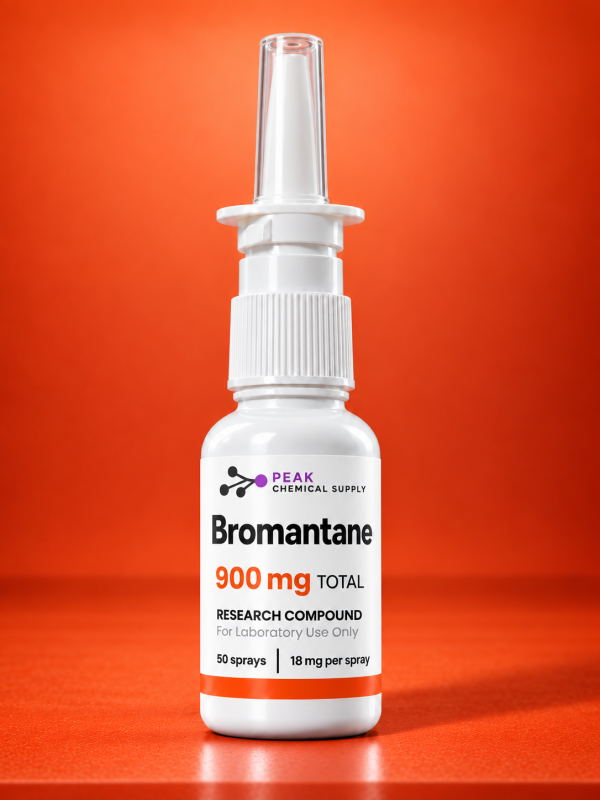
Bromantane SprayFor research use only. Not for human consumption.
N-(4-bromophenyl)adamantan-2-amine
CAS 87913-26-6 · 6 ml
Bromantane, 900 mg, liquid solution, 6 mL. Research use only.
Out of stock
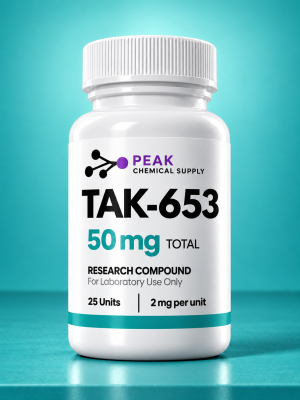 TAK-653
$39.99 USD
Research use only · Not for human or animal consumption
Batch and analysis
- CAS
- 87913-26-6
- Systematic name
- N-(4-bromophenyl)adamantan-2-amine
- Fill volume
- 6 ml
- Also known as
- Bromantan
- Molecular formula
- C16H20BrN
- Molecular weight
- 306.24 g/mol
- PubChem CID
- 4660557
About this compound
For In Vitro Research Use Only – Not for Human or Veterinary Application
Bromantane in a nasal spray format
Bromantane (also spelled bromantan or bromontan; trade name Ladasten) is N-(4-bromophenyl)adamantan-2-amine: an adamantane cage carrying a bromophenyl amine. C16H20BrN, 306.24 g/mol, CAS 87913-26-6, PubChem CID 4660557.
Where it comes from
It came out of the Soviet "actoprotector" programme, a search for synthetic adaptogens run by Prof. V. Vinogradov at the Military Medical Academy in Leningrad. It is described as the most practically important actoprotector after bemitil, and it is certified as a drug in Russia under the name Ladasten. Most of the later mechanism work comes from S. B. Seredenin's group at the Zakusov Institute of Pharmacology in Moscow. The Lancet reported it as a new doping agent in 1997, and it has been prohibited in sport since then.
What the mechanism research proposes
Bromantane is not described as a classical dopamine releaser or reuptake blocker. The main hypothesis is that it raises dopamine synthesis. In rats, it increased expression of the genes for tyrosine hydroxylase and DOPA decarboxylase in the striatum and hypothalamus, with brain L-DOPA and dopamine rising alongside. Proposed upstream steps include demethylation of the tyrosine hydroxylase gene promoter, protein kinase C activation, and lower HDAC1. In rat hippocampal slices it converted short-term potentiation into long-term potentiation, an effect weakened by a D1/D5 antagonist. No direct binding target has been identified.
Gaps in the record
About 74 PubMed records, many in Russian and available only as abstracts. Most of the work comes from one institute, with little independent replication and no published receptor-binding profile. We found no published data on bromantane in a liquid or nasal formulation.
Format and testing
900 mg of bromantane per bottle, as a liquid nasal spray. No certificate of analysis is posted for the spray. The bromantane certificate on our site belongs to the capsule lot. Capsules are listed separately.
Literature
- Oliynyk & Oh 2012, "The pharmacology of actoprotectors": PMID 24009833
- Vakhitova et al. 2004, TH and DDC gene expression: PMID 15500036
- Vakhitova et al. 2006, TH promoter demethylation: PMID 16915929
- Mikhaylova et al. 2007, hippocampal LTP: PMID 17854844
- Burnat et al. 1997, Lancet: PMID 9314900
- PubChem: CID 4660557
Disclaimer
This compound has not been evaluated by the FDA. It is not intended to diagnose, treat, cure, or prevent any disease. All use must follow institutional and regulatory guidelines.
Terms of Sale
By purchasing, the buyer affirms they are a qualified researcher or institution. All sales are final. The purchaser assumes full responsibility for handling, use, and regulatory compliance. Bromantane Spray reference material is supplied for qualified in vitro laboratory research only — not for human or veterinary consumption, administration, compounding, dispensing, diagnostic use, therapeutic use, or patient use.