
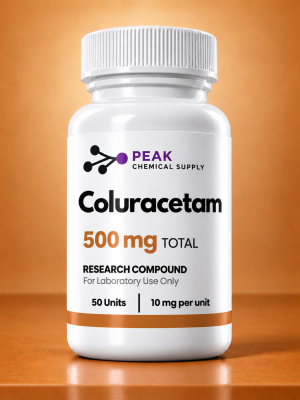
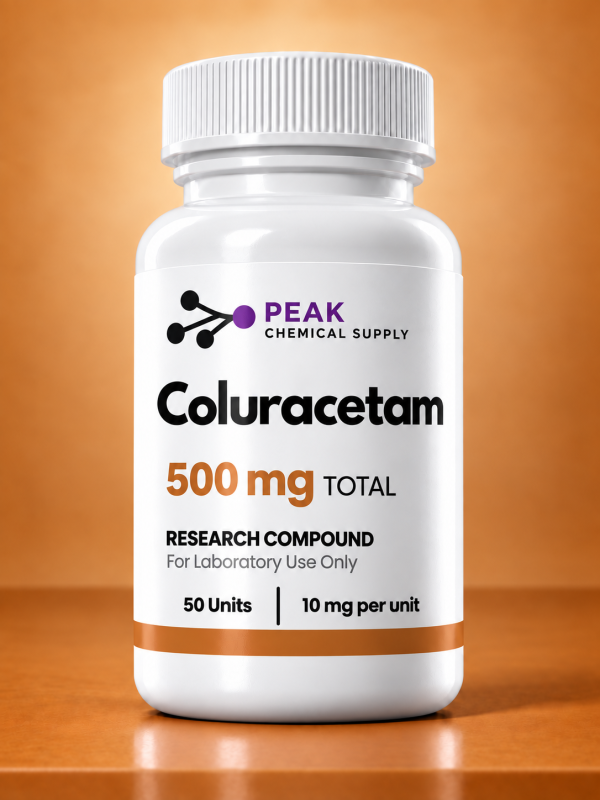
 Coluracetam
$29.99 USD

N-(2,3-dimethyl-5,6,7,8-tetrahydrofuro[2,3-b]quinolin-4-yl)-2-(2-oxopyrrolidin-1-yl)acetamide
CAS 135463-81-9 · 50 × 10 mg · 500 mg total
50 × 10mg Coluracetam. Research use only.
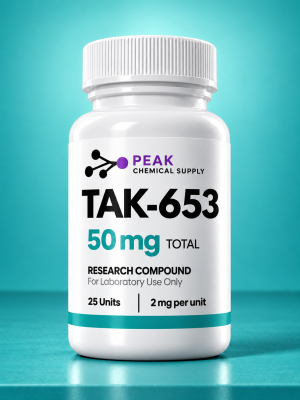 TAK-653
$39.99 USD
Research use only · Not for human or animal consumption
For In Vitro Research Use Only – Not for Human or Veterinary Application
Coluracetam pairs the racetam side chain, 2-oxopyrrolidin-1-yl-acetamide, with a fused tetrahydrofuro[2,3-b]quinoline ring. Mitsubishi Chemical's Yokohama Research Center made it in the early 1990s as MKC-231. It later appeared as BCI-540 in a BrainCells Inc. Phase 2 study (2008–2009).
N-(2,3-dimethyl-5,6,7,8-tetrahydrofuro[2,3-b]quinolin-4-yl)-2-(2-oxopyrrolidin-1-yl)acetamide · C19H23N3O3 · 341.4 g/mol · CAS 135463-81-9 · PubChem CID 214346
The primary pharmacology describes it as an enhancer of high-affinity choline uptake (HACU), the rate-limiting step in making acetylcholine. Some reviews call it an "AMPAkine", but we found no primary AMPA-receptor data behind that label.
About a dozen PubMed papers, mostly from the originator. They cover AF64A lesion models in rats and mice, a phencyclidine-exposure model, glutamate-toxicity protection in cultured cortical neurons, and recent stress-induced bowel-motility models in rats, where it was used as a CHT1 tool compound. No primate work.
The certificate linked above is our own NuMega Resonance Labs qNMR report for lot PCS-COL-2726O, dated October 27, 2026, showing 96.8%. 50 capsules of 10 mg per bottle.
Disclaimer
This compound has not been evaluated by the FDA. It is not intended to diagnose, treat, cure, or prevent any disease. All use must follow institutional and regulatory guidelines.
Terms of Sale
By purchasing, the buyer affirms they are a qualified researcher or institution. All sales are final. The purchaser assumes full responsibility for handling, use, and regulatory compliance. Coluracetam reference material is supplied for qualified in vitro laboratory research only — not for human or veterinary consumption, administration, compounding, dispensing, diagnostic use, therapeutic use, or patient use.
Coluracetam