
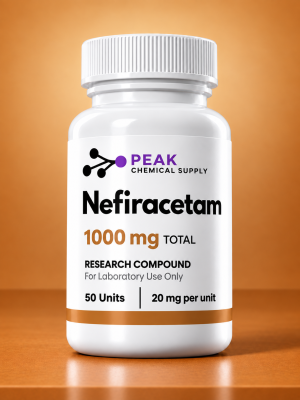
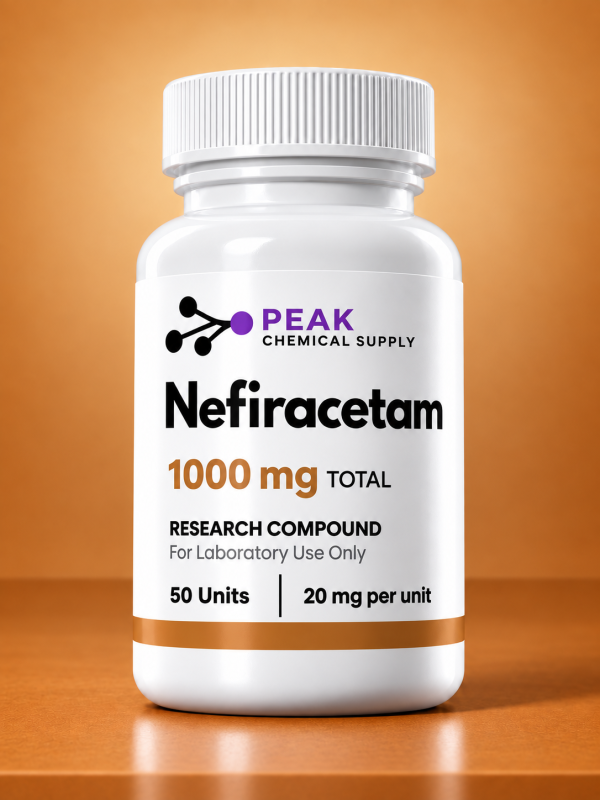
 Nefiracetam
$29.99 USD

N-(2,6-dimethylphenyl)-2-(2-oxopyrrolidin-1-yl)acetamide
CAS 77191-36-7 · 50 × 20 mg · 1000 mg total
50 × 20mg Nefiracetam. Research use only.
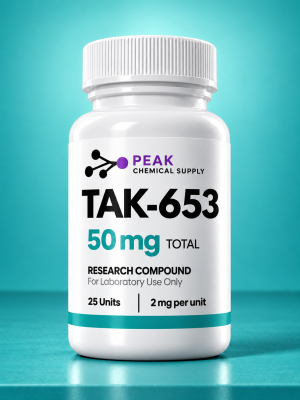 TAK-653
49% of buyers of this compound
$39.99 USD
Research use only · Not for human or animal consumption
For In Vitro Research Use Only – Not for Human or Veterinary Application
Daiichi Seiyaku in Tokyo developed nefiracetam in the late 1980s. It is a racetam: N-(2,6-dimethylphenyl)-2-(2-oxopyrrolidin-1-yl)acetamide, C14H18N2O2, 246.30 g/mol, CAS 77191-36-7, PubChem CID 71157. Daiichi took it through Phase 3 studies in Japan and withdrew its Japanese application in February 2002. It isn't approved anywhere.
Unlike most racetams, nefiracetam has detailed electrophysiology behind it, and that work points at more than one system:
| Target | Reported effect | System |
|---|---|---|
| L-type Ca²⁺ channels | Increased currents through Gi/Go G proteins, bell-shaped concentration curve | NG108-15 cells |
| Nicotinic α4β2 receptors | Potentiation at nanomolar concentrations, through PKA and PKC | Rat cortical neurons, oocytes |
| NMDA receptors | Potentiation through PKCα and reduced Mg²⁺ block | Neurons (electrophysiology) |
| Transmitter turnover | Increased cholinergic and GABAergic turnover | Rat brain |
Which of these is primary hasn't been resolved. Its hippocampal effects also look pharmacologically distinct from piracetam's and aniracetam's.
A large rodent literature covers amnesia models (scopolamine, electroconvulsive shock, cycloheximide, basal-forebrain lesion), ischemia, traumatic brain injury, seizure and neuropathic-pain models. There is also eyeblink conditioning in older rabbits and a 1994 toxicology series in rats, dogs and rabbits. In that series, renal papillary necrosis appeared only in dogs, linked to a metabolite (M-18). More recently it came up as one of two leads that reversed synaptic phenotypes in human stem-cell MECP2-knockout neurons and organoids.
Lot PCS-NEFI-2608A: 98.0% by quantitative NMR, NuMega Resonance Labs, report dated August 10, 2026. 50 capsules of 20 mg per bottle, 1,000 mg in total.
Disclaimer
This compound has not been evaluated by the FDA. It is not intended to diagnose, treat, cure, or prevent any disease. All use must follow institutional and regulatory guidelines.
Terms of Sale
By purchasing, the buyer affirms they are a qualified researcher or institution. All sales are final. The purchaser assumes full responsibility for handling, use, and regulatory compliance. Nefiracetam reference material is supplied for qualified in vitro laboratory research only — not for human or veterinary consumption, administration, compounding, dispensing, diagnostic use, therapeutic use, or patient use.
Nefiracetam