
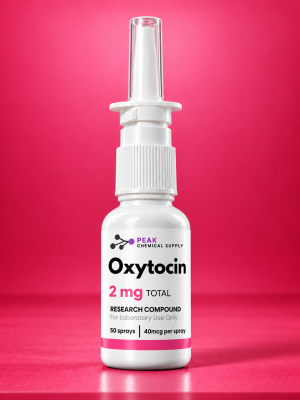
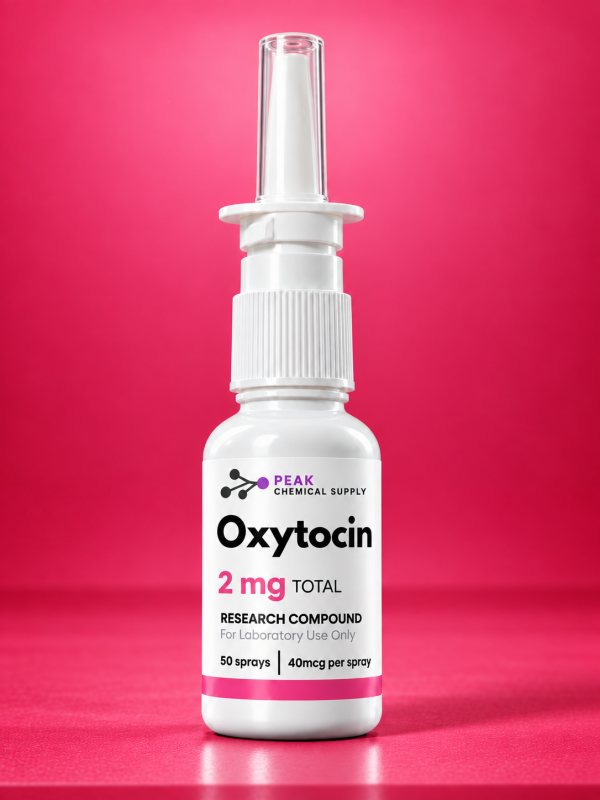
 Oxytocin Spray
$29.99 USD

Cys-Tyr-Ile-Gln-Asn-Cys-Pro-Leu-Gly-NH2
CAS 50-56-6 · 6 ml
Oxytocin, 2 mg, liquid solution, 6 mL. Research use only.
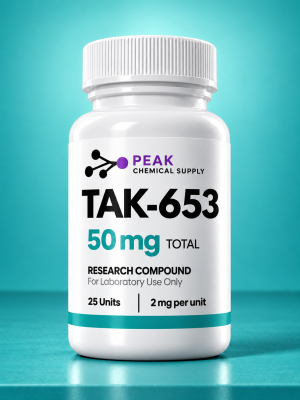 TAK-653
$39.99 USD
Research use only · Not for human or animal consumption
For In Vitro Research Use Only – Not for Human or Veterinary Application
In 1953 Vincent du Vigneaud's lab worked out oxytocin's structure and then made it from scratch, the first time a polypeptide hormone had been synthesized. Du Vigneaud received the 1955 Nobel Prize in Chemistry for that work.
Oxytocin is a nine-residue peptide, Cys-Tyr-Ile-Gln-Asn-Cys-Pro-Leu-Gly-NH2. A disulfide bridge between the two cysteines (positions 1 and 6) closes it into a six-residue ring, and the chain ends in a glycinamide. Both features are part of its identity: the open, free-thiol chain is not oxytocin.
CAS 50-56-6 · Formula C43H66N12O12S2 · Molecular weight 1007.2 g/mol · PubChem CID 439302
In the body, oxytocin is made mainly in the paraventricular and supraoptic nuclei of the hypothalamus and released from the posterior pituitary. It is also produced in peripheral tissues. It acts through a single receptor, OXTR, a G protein-coupled receptor that signals mainly through Gq and phospholipase C-beta, and can also couple to Gi and MAPK pathways. The receptor's high-affinity state depends on magnesium ions and membrane cholesterol.
This is one of the most studied peptides there is. A 2018 review counted nearly 25,000 publications since 1930, spread across many independent groups. The work covers receptor pharmacology and mutagenesis, cell signalling, knockout and transgenic mice, and rodent and primate behavioural neuroscience. The research areas include reproduction, lactation, social and maternal behaviour, and stress circuits. It is also an approved hormone medicine in injectable form. Open questions include how receptor signalling translates into behaviour, and how steroid hormones regulate the system.
2 mg of oxytocin in 6 mL of sterile water (about 0.33 mg/mL), in a 15 mL white coated glass bottle with a spray top. The solution has no buffer and no preservative. That matters for stability: in buffered solution studies, oxytocin breaks down much faster at pH 7 than at pH 4.5. The approved oxytocin nasal spray (Syntocinon, buffered and preserved) is labelled for storage at 2–8 °C before opening. No certificate of analysis is posted for this product yet.
Disclaimer
This compound has not been evaluated by the FDA. It is not intended to diagnose, treat, cure, or prevent any disease. All use must follow institutional and regulatory guidelines.
Terms of Sale
By purchasing, the buyer affirms they are a qualified researcher or institution. All sales are final. The purchaser assumes full responsibility for handling, use, and regulatory compliance. Oxytocin Spray reference material is supplied for qualified in vitro laboratory research only — not for human or veterinary consumption, administration, compounding, dispensing, diagnostic use, therapeutic use, or patient use.
Oxytocin Spray